The Korean blemish-fighting routine that actually calms your skin
Blemish-prone skin doesn't mean skin that needs drying out. Yet that's the most common reflex when dealing with breakouts: reaching for harsh cleansers, alcohol-based toners and aggressive anti-blemish creams, hoping the skin will eventually calm down. The result, most of the time, is skin that feels tight, flakes in places, and produces even more sebum to compensate. K-beauty tackles the problem differently. Rather than drying out the skin at all costs, the Korean approach treats blemishes while soothing and respecting the skin barrier, combining targeted actives with a gentle overall routine. At Clow, this is one of the routines we get asked about most, so here's how to build it, step by step.
Why blemish-prone skin mostly needs gentleness
A blemish appears when a pore gets clogged, whether by excess sebum, dead skin cells or bacteria, and inflammation sets in around it. The instinct to dry the skin out aggressively comes from a good place, but it often makes things worse: stripped skin reacts by producing even more sebum, and a weakened skin barrier lets irritants and blemish-causing bacteria through more easily. The Korean approach relies on a two-pronged strategy: precisely target the causes (excess sebum, clogged pores, bacteria) with active but measured ingredients, while supporting the skin barrier with soothing, repairing ones. It's this combination that treats breakouts without leaving your skin tight everywhere else.
Step 1: a double cleanse that's adapted, not harsh
It all starts with a thorough but gentle cleanse. A lightweight cleansing oil dissolves excess sebum and the day's buildup, then a mild, low-pH foaming cleanser finishes the job. The goal is to clear out what's clogging the pores without stripping the skin, which would only weaken the skin barrier further. Some ranges offer cleansers enriched with tea tree or a very low dose of salicylic acid, useful as support, but this step shouldn't carry the bulk of the treatment.
Step 2: BHA, the go-to exfoliant for pores
BHA (salicylic acid) is the chemical exfoliant best suited to blemish-prone skin because it's oil-soluble: it penetrates the sebum deep inside the pore and helps clear it out from within, whereas an AHA mainly works on the surface. Used as a targeted treatment or toner, two to three times a week to start, it helps regulate blackheads, micro-cysts and enlarged pores. The golden rule is to go gradually: introduce BHA little by little, never every night from the start, and always follow it with a soothing product to avoid irritation.
- Start with 1 to 2 applications a week, evenings only
- Never combine BHA with another exfoliating active on the same night
- Wait until your skin tolerates the rhythm well before increasing frequency
- SPF is a must the next morning, since BHA makes skin more sensitive to the sun
Step 3: centella asiatica and snail mucin to soothe
This is where the Korean routine really sets itself apart. After an active like BHA, the skin needs soothing, repairing support, and two ingredients come up again and again in k-beauty anti-blemish formulas: centella asiatica, known for calming redness and supporting skin repair, and snail mucin, rich in compounds that help ease inflammation and improve the look of marks left by old breakouts. A snail mucin serum, applied after BHA, helps skin recover faster while gently working on post-blemish marks, that stubborn "post-acne" that can linger well after the breakout itself is gone.
Treating a blemish is good. Soothing the skin around it is what stops the cycle from starting over.
Step 4: tea tree as a spot treatment, not an all-over one
Tea tree is well known for its action on localised blemishes. In k-beauty, it's mostly found in sticks or targeted patches, meant to be applied only to the blemish itself, rather than all over the face where it could needlessly dry out healthy areas. Hydrocolloid patches, hugely popular in Korea, also protect the blemish from friction and bacteria overnight while absorbing excess secretions, which often speeds up healing.
Step 5: moisturise, always, even on oily skin
This is probably the most overlooked step for blemish-prone skin: moisturising. Many people assume oily or blemish-prone skin doesn't need a moisturiser, when it's actually the opposite. Good hydration, in a gel or lightweight texture that won't weigh the skin down, actually helps regulate sebum production and strengthen the skin barrier, making skin less reactive to the actives that follow. Gel-cream textures, very common in k-beauty, hydrate without leaving a greasy film, a real plus for combination to oily skin.
And in the evening, one last useful habit
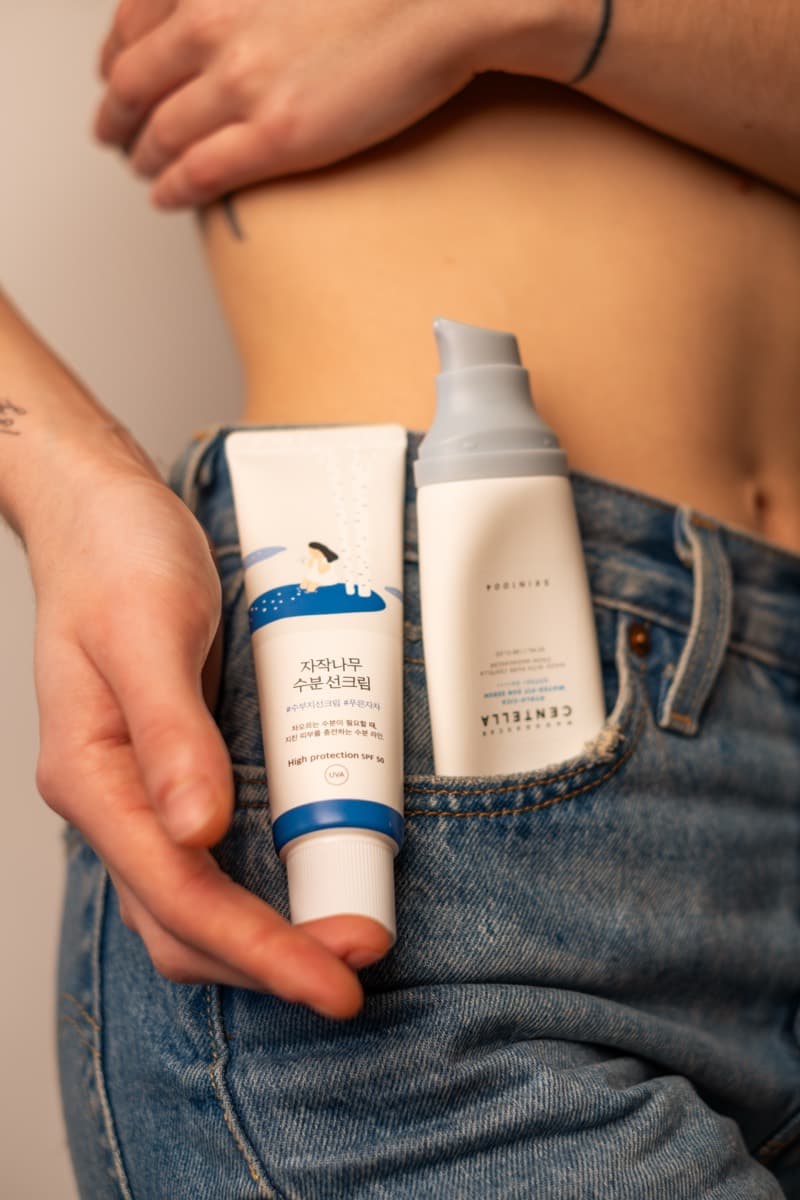
Always finish with sun protection the next morning if you've used an exfoliant or targeted active the night before: blemish-prone skin tends to hold onto pigmented marks, and unfiltered sun exposure makes this noticeably worse.
A routine to adapt to your pace, not copy as is
This structure works as a foundation, not a fixed recipe. If you live in Brussels or elsewhere in Belgium, humidity and seasonal changes can affect how reactive your skin is, which is a good reason to adjust BHA frequency month to month. And if blemishes are severe, persistent or painful, a skincare routine, however well thought out, is no substitute for a dermatologist's advice. K-beauty remains an excellent complement for keeping skin more stable and avoiding relapses, especially thanks to this "target and soothe" dual approach that sets it apart from more classic anti-blemish routines. At Clow, we put these products together with that balance always in mind, so your routine stays effective without ever becoming harsh.